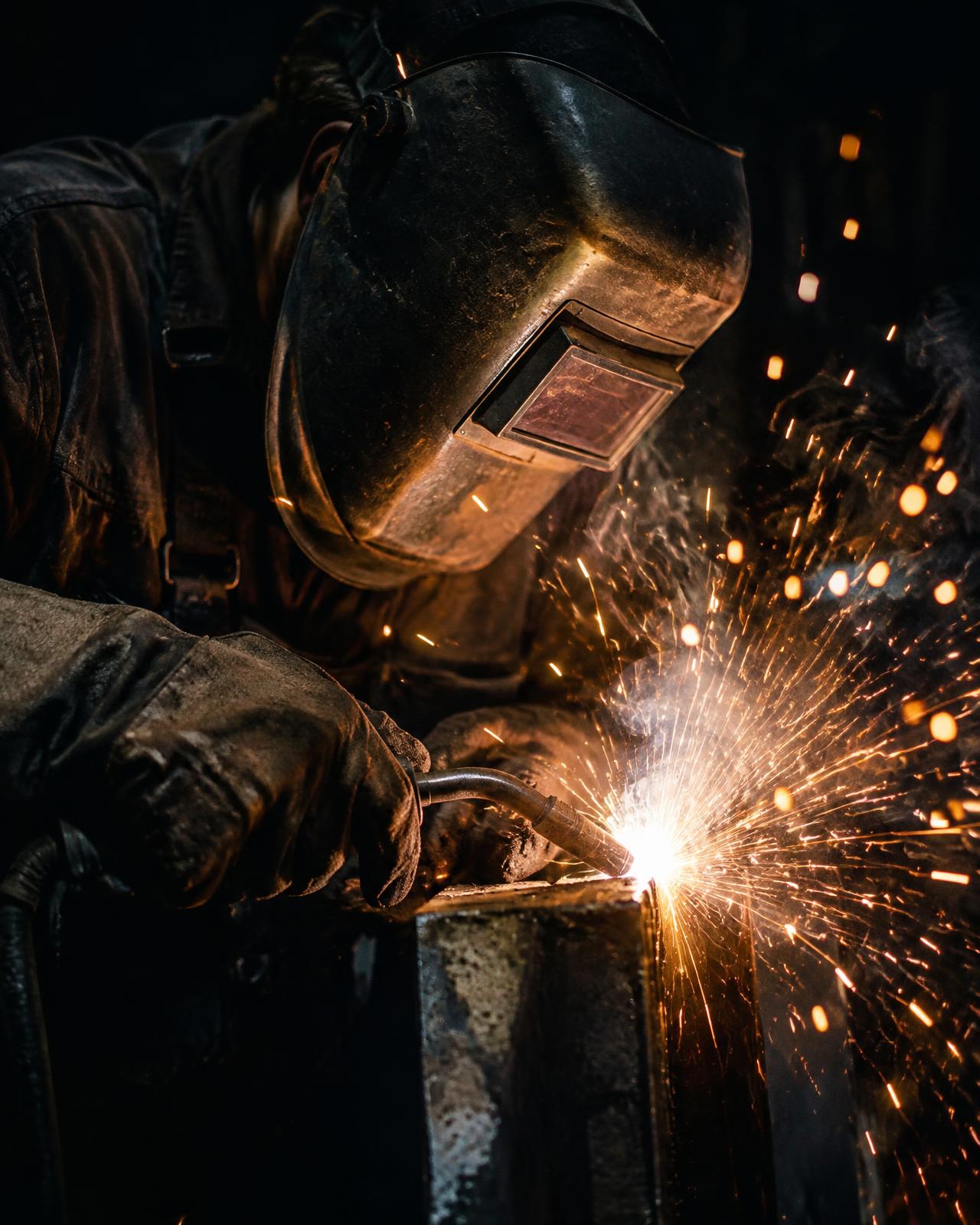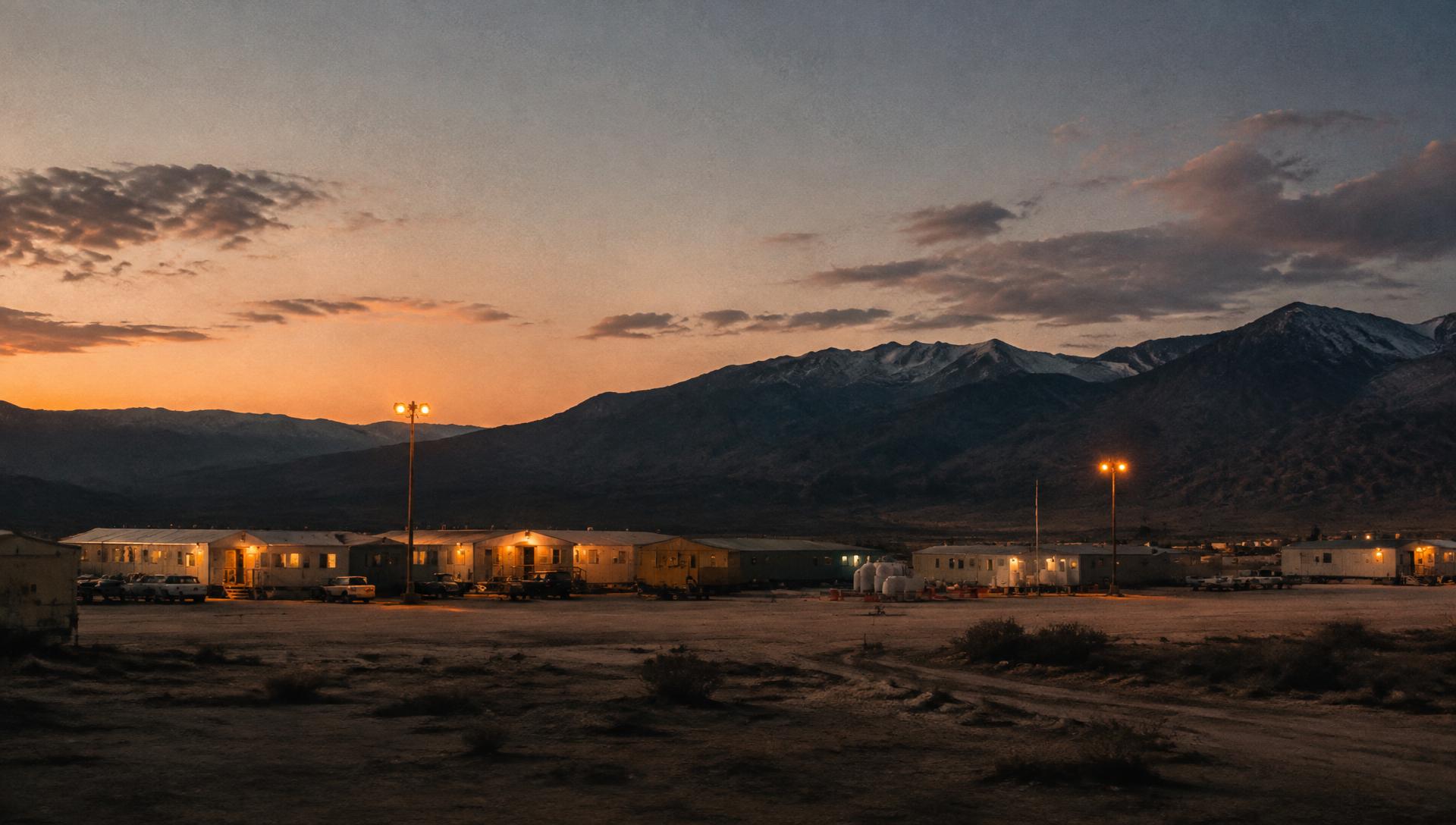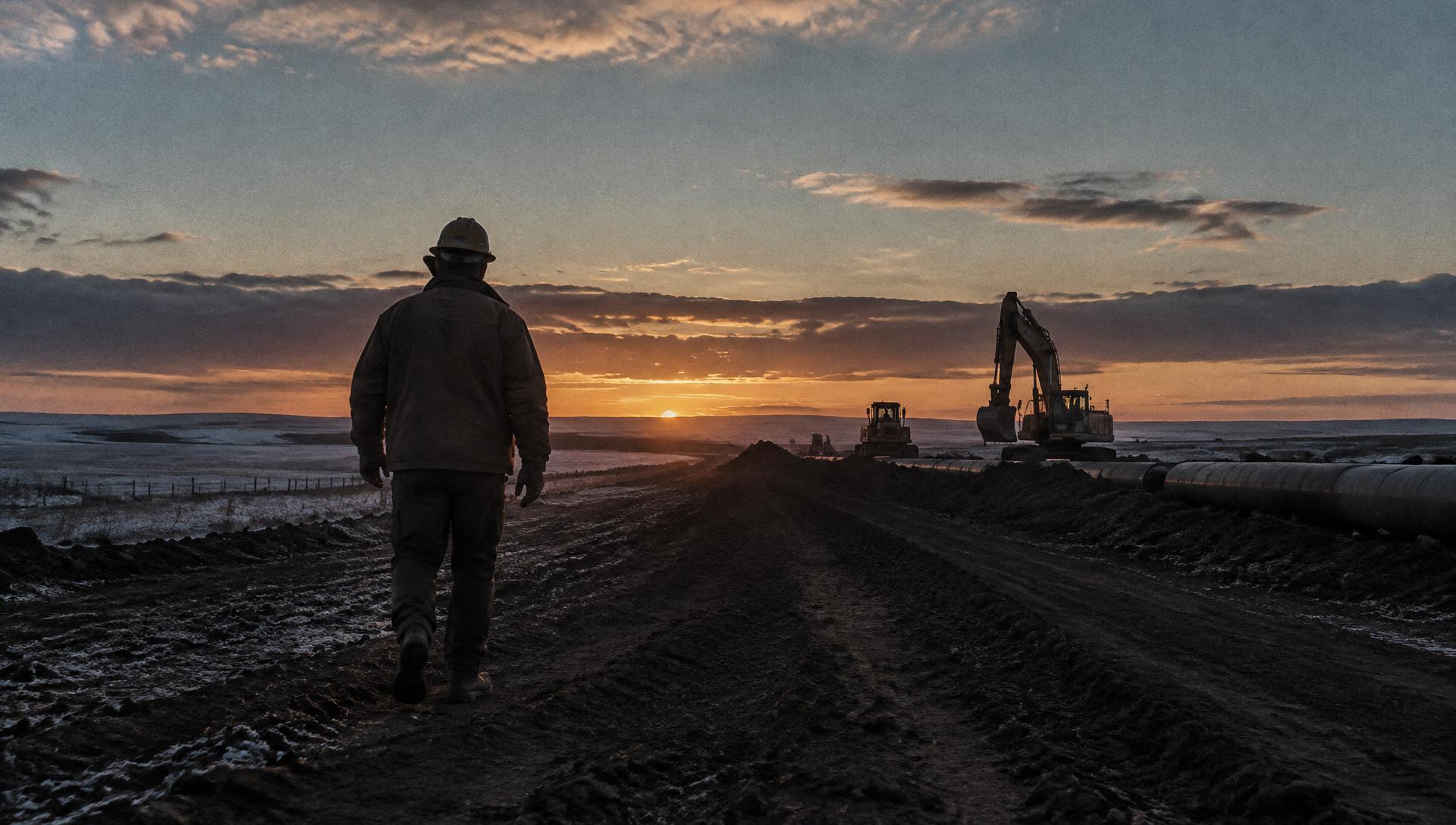
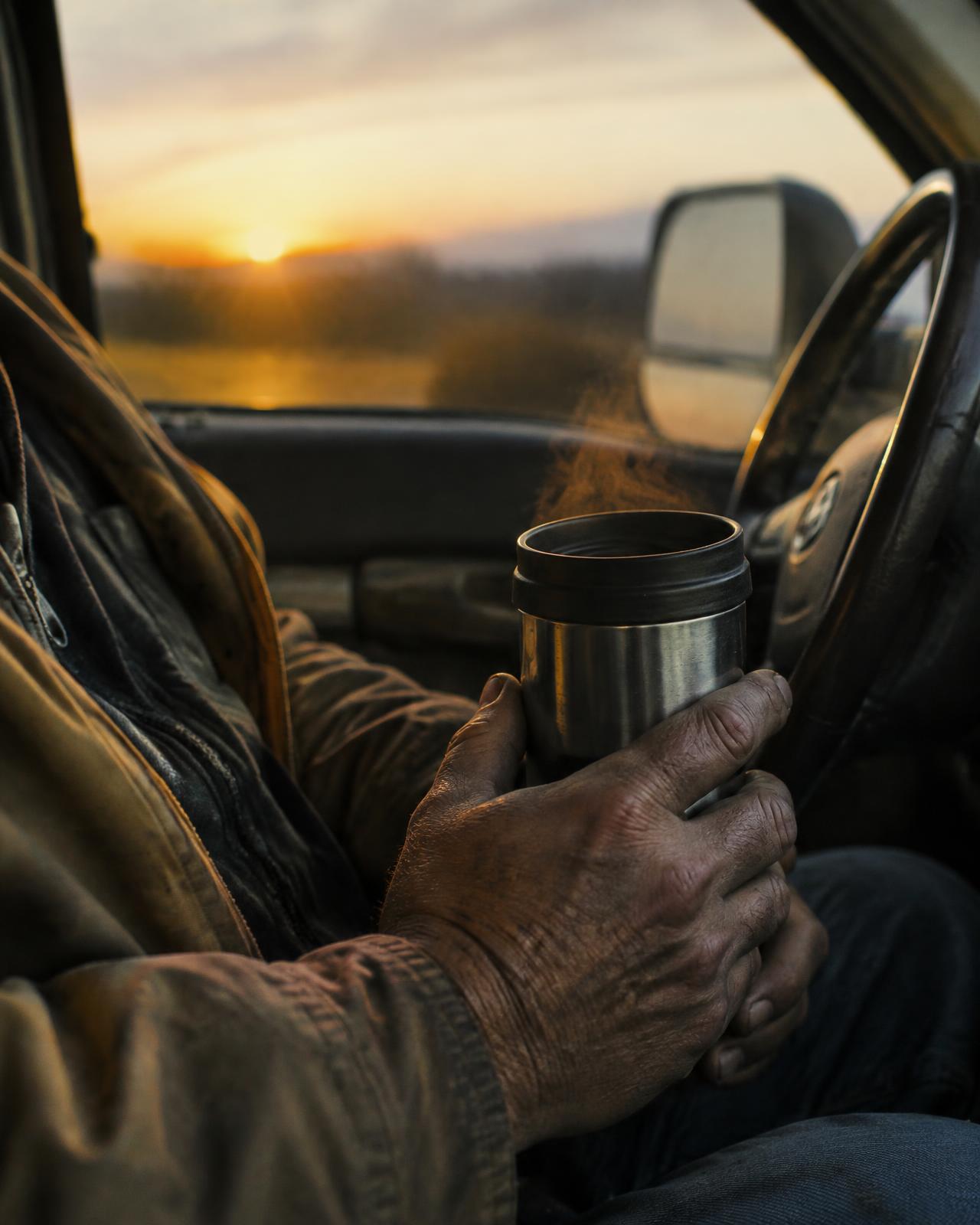
Before the sun clears the ridge, the trucks are already moving. Headlights trace the access road in a slow procession, and inside each cab the same ritual repeats: a thermos, a radio murmuring the weather, a phone propped against the dash showing a photo from home. This story begins there, in the hour before the work, because that is the hour no one photographs.
IFour in the Morning
A spread is a moving city. It assembles in a field, stretches across tens of miles and then, months later, disappears. The people who staff it arrive from many states and leave for many more. Our reporting will begin by riding along before dawn with crews who agree to have us — listening first, recording second.
We want to understand the small architecture of a working day: who makes the coffee in the yard, who reads the safety briefing aloud, who checks on the newest hand. These are the details that make the difference between a job and a life.
IIThe Distance
Distance is the condition of this work. Weeks on, days off, flights and drives measured in states rather than miles. We intend to speak with the partners and children who live on the other end of that distance — how they plan birthdays around rotations, how they learn the names of towns they will never visit.
Families are not a backdrop to the industry; they are part of its infrastructure. Any reporting here will be done with explicit consent, and we will let those we interview review how their words are represented in context.
Rights-cleared photography required
A family at a kitchen table, video call in progress — to be photographed with consent
Sidebar · Reporting questions
- — How do rotations shape family routines?
- — What support exists, and what is missing?
- — What do children understand about the work?